

UV-filter skin penetration is a growing concern as modern sunscreens are formulated with additional active ingredients such as brighteners, moisturizers, and antioxidants.. A new study from a research group in Guanzhou (Wucheng Yang, Yu Xie, Chaowan Guo, Zedong Ouyang, Chuanxia Jiang, Xiaolin Chen, Jian Wei, Jianhua Tan, Ruifang Fan), investigates whether adding skin-brightening ingredients influences the skin penetration of UV filters in sunscreen formulations. By combining in vivo Confocal Raman Spectroscopy with advanced quantitative data analysis, the authors provide new insights into sunscreen safety and formulation design.
Today’s sunscreens are no longer only designed for sun protection, but often combine multiple benefits such as skin brightening, moisturizing, and antioxidant activity. These new formulations offer clear advantages for consumers, while they also introduce new scientific challenges.
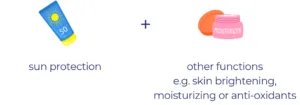
A well-formulated sunscreen must ensure that UV filters remain on or near the skin surface. At the same time, additional active ingredients, such as skin-brightening agents, are designed to penetrate into the stratum corneum to deliver their intended benefits. The result is a product that needs to meet contrasting requirements.
Understanding how these competing mechanisms interact is essential for both product performance and safety. In fact it is needed to ensure that additional components do not lead to increased UV-filter skin penetration.
To investigate this challenge, a controlled in vivo study was conducted by confocal Raman spectroscopy (CRS) using RiverD’s gen2-SCA skin composition analyzer. 10 volunteers, aged between 20 and 24 were involved in this research. Sunscreen was applied to a 9 cm² skin area with a standardized dosage of 2 mg/cm² (18 mg total). The product exposure time was 60 minutes for each area.
After exposure, the skin surface was carefully cleaned to ensure that only penetrated compounds, not surface residues, were analyzed.
Confocal Raman spectroscopy is a powerful, non-invasive technique that enables real-time measurement of ingredient penetration into the skin. In this study, the methodology was further enhanced to allow quantitative analysis of UV-filter penetration and achieve robust quantitative insights into how ingredients behave in the skin.
To ensure reliability, CRS-derived results were compared with in vitro Franz diffusion cell experiments, widely considered the gold standard for skin permeation studies.
The comparison showed the same UV-filter penetration trends OMC > EHT (Octyl 4-methoxycinnamate > Ethylhexyl triazone) in both methods and an excellent in vitro–in vivo correlation (R² ≈ 0.99), which validated the approach with RiverD’s Raman technology. Additionally, CRS enabled detection of:
Results demonstrate that permeability parameters derived from CRS data remain consistent across simple and complex formulations. Consequently, this validation confirms that CRS can reliably quantify skin penetration in vivo, even in complex formulations.
The results showed that sunscreens containing the skin-brightening agent increase UV-filter uptake. In fact, skin-brightening sunscreens containing nicotinamide increased UV-filter penetration by 1.3 to 2.3 times. This increase was observed across multiple formulations and UV filters.
These findings have important implications for both formulation science and product safety. In fact:
This study highlights the importance of understanding how complex formulations behave in real-world conditions. While multifunctional sunscreens offer enhanced consumer benefits, they also require careful scientific evaluation.
By enabling non-invasive, real-time, and quantitative analysis of skin penetration using CRS, RiverD’s technology provides the detailed insights needed to support data-driven formulation optimization and safety during product development.
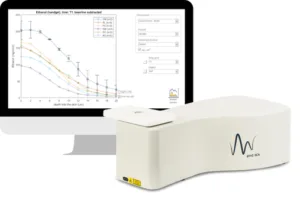
Our gen2-SCA system is specifically designed to meet these needs. Data collection is largely automated and fast. This makes it possible to quickly perform measurements at different measurement locations within a treated skin area, to account for natural biological variance , for each subject at each timepoint. It allows researchers to accurately analyze ingredient behavior in the skin and concretely supports scientific advancements in the design of products’ compositions.
By combining confocal Raman spectroscopy with advanced data analysis with our software SkinTools, RiverD ensure both performance and safety.
Read the full paper here: https://pubs.acs.org/doi/10.1021/acs.est.5c04694
Follow us to be informed on our ongoing projects and contact us for information about Confocal Raman Spectroscopy in the sunscreen field.
